Signs of Roof Damage After a Florida Storm
Quick Answer: After a storm passes, walk your property and look for shingles that are missing, curled, or creased; granules collecting in gutters and downspouts; dented or loosened gutters and vent covers; and any lifted or bent flashing around chimneys, skylights, or walls. Inside, check the attic and ceilings for new stains, a musty smell, or sagging, since those often show up before you notice anything from the ground. Wind and hail damage is frequently subtle at first glance, so even if your roof looks fine from the driveway, a closer look, and eventually a professional inspection, is the only way to know for sure that the roofing system came through intact.
The wind dies down, the sky clears, and the first instinct is to check the yard for downed branches and knocked-over patio furniture. The roof gets a quick glance, and if nothing looks obviously wrong, life moves on. That reaction is understandable, but it misses how storm damage actually behaves. A roof rarely fails all at once during a storm. More often, the wind and rain create small weaknesses, a lifted shingle edge, a cracked tile, a loosened vent boot, that do not leak the day of the storm but fail during the next hard rain, or the one after that. That delay is what trips people up.
After years working roofs across DeBary, Deltona, Sanford, and the rest of Volusia and Seminole counties, a pattern shows up storm after storm: the homeowners who catch damage early are the ones who know exactly what to look for and check both the outside and the inside of the house, not just the roofline from the street. Here is what actually shows up after wind, hail, and heavy rain move through, and how to read the signs before they turn into a bigger repair.
Why Storm Damage Isn't Always Obvious
Wind and hail do not damage a roof the way a falling tree limb does. A tree limb leaves a hole you can see. Wind and hail leave subtler marks: a shingle that lost its seal but is still lying mostly flat, a bruise on a shingle surface that has not yet blistered, a hairline gap at a flashing joint that only lets water through when rain comes from a specific direction. None of these announce themselves the way a puncture or a missing section does.
Central Florida makes this worse in two ways. First, storms here are frequent enough that a roof can accumulate a string of small, unaddressed weaknesses over a single hurricane season, each one making the roof a little more vulnerable to the next event. Second, our humidity means that once water does get past a weak point, it does not evaporate quickly. A leak that would dry out and go unnoticed in a drier climate keeps feeding mold and rot here instead. That combination is exactly why a careful check after every significant storm matters more than it might in other parts of the country.
Signs You Can Spot From the Ground
You do not need to get on a ladder to start a storm damage check, and in most cases you shouldn't. Begin with a walk around the exterior of the house and look up from a few different angles.
Shingles That Look Out Of Place
Watch for shingles that appear darker than the surrounding roof, lie at a slightly different angle, or have curled edges catching the light differently than the rest of the field. A missing shingle is obvious, but a lifted or creased one is the more common outcome of wind, and it is far easier to miss.
Granules In The Gutters And At The Base Of Downspouts
Asphalt shingles shed a small number of granules normally, but a noticeable pile after a storm, especially fresh, uniform-looking granules rather than the usual gray sediment, points to impact damage or wind abrasion on the shingle surface.
Dented Or Loosened Gutters, Vent Caps, And Other Metal
Metal takes an impact differently than shingles do, and it often shows hail or debris strikes more clearly. Check gutters, downspouts, roof vents, and any exposed flashing for dents, dings, or pieces that have pulled away from where they were fastened.
Debris Caught On The Roof Or In Valleys
Branches, leaves, and other wind-blown material that settled into a valley or against a wall can trap moisture against the roofing material even after the storm passes, so it is worth noting where debris landed, not just whether it caused visible damage.
Sagging Or An Uneven Roofline
Step back far enough to see the full slope of the roof. Any dip or low spot that wasn't there before a storm points to structural stress, often from wind uplift or trapped water weight, and it needs attention now rather than a wait-and-see approach.
What Wind Damage Specifically Looks Like
Wind attacks a roof at its edges and seals. Strong gusts can lift a shingle’s leading edge, breaking the adhesive strip underneath. Once broken, that shingle may flap during future storms, increasing the risk of further damage.
Look for shingles with slight upward curls at corners or edges, creases across their surfaces, and ridge cap shingles that appear shifted or loosely seated. These signs can indicate that wind has compromised the roof’s protective layers.
Ridge caps, which run along the roof’s peak, receive direct wind exposure and often loosen before other components. On tile roofs, damage may appear as slipped, misaligned, or cracked tiles after being lifted and dropped during strong wind events.
What Hail Damage Specifically Looks Like
Hail damage on asphalt shingles often appears as soft, slightly indented bruises where impacts loosen granules. These marks can be difficult to spot, sometimes appearing only as subtle texture changes or faint dark areas.
Over time, UV exposure can accelerate deterioration around bruised spots. Dented gutters, vent covers, and flashing also provide useful clues, indicating hail may have struck the shingles with similar force nearby.
Signs Inside Your Home After a Storm
Some reliable storm damage signs appear inside rather than outside. After a significant storm, spend several minutes checking the attic and ceilings, particularly in rooms located on the home's uppermost floor for moisture.
In the attic, use a flashlight to inspect insulation, roof decking, and rafters for wet areas, dark staining, or unexpected daylight. Water can travel along decking before dripping, revealing entry paths early.
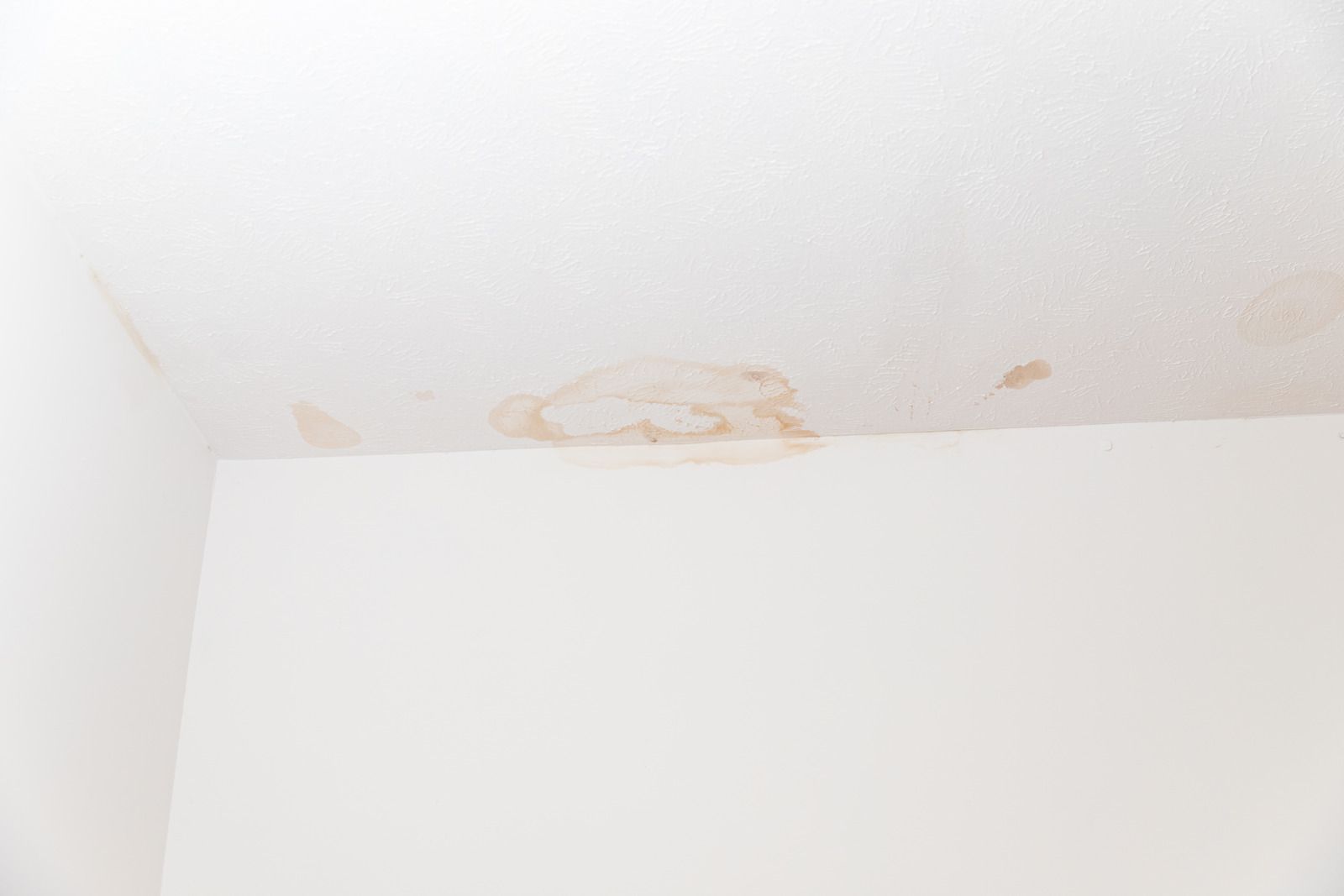
Inside living spaces, watch ceilings and upper walls for new yellowish or brown discoloration. A new musty smell also deserves attention, as moisture may become noticeable through odor before visible staining develops.
TIP: Keep a simple habit after every named storm or significant wind event: walk the attic with a flashlight and take a couple of photos of the ceilings in every room, even if nothing looks wrong. Comparing photos from storm to storm makes it much easier to catch a new stain or a new damp spot early, before it spreads far enough to be obvious on its own.
Flashing, Vents, and Other Small Points of Failure
Flashing seals transitions around chimneys, skylights, sidewalls, and valleys, making it vulnerable during storms. Wind can lift flashing edges enough to break seals without visibly bending the metal, allowing water inside during future rainfall.
Pipe boots and vent collars face similar risks. Rubber or plastic collars around plumbing vents can crack or shift during severe weather, particularly after prolonged sun exposure. Because these components are small and often hidden, damage can easily go unnoticed during a quick inspection.
When to Get a Professional Inspection After a Storm
A homeowner's ground-level and interior check can catch obvious problems and help determine urgency. However, flashing seals, ridge cap undersides, and tile underlayment cannot be evaluated safely or accurately without examining the roof closely.
Any storm that brings down branches, causes widespread power outages, or produces sustained high winds deserves professional follow-up, even when nothing looks wrong from the ground. This is especially important for tile and flat roofs, where hidden underlayment or membrane damage may remain unnoticed.
Warning: Do not get on the roof yourself right after a storm to inspect it, even if the weather has cleared. Wet shingles, wind-loosened components, and standing water make for a seriously dangerous surface. A fall isn't worth it when you can spot most damage from the ground or hand the close-up look to a professional.
What Happens If Storm Damage Goes Unaddressed
Storm damage deserves prompt attention because Florida's climate can turn small weaknesses into larger problems quickly. A cracked pipe boot may allow water inside during repeated storms, while Central Florida's humidity slows drying and increases moisture concerns.
Small failures can compound when left alone. Wet insulation loses effectiveness, damp decking can soften and eventually rot, and compromised ridge caps may fail during another storm. Prompt inspections help identify problems before repairs become more extensive and expensive.
Frequently Asked Questions
How soon after a storm should I check my roof for damage?
As soon as it's safe, ideally within a day or two while damage is fresh and easy to trace. Check the exterior and attic yourself, then bring in a professional for anything you can't evaluate.
Can a roof have storm damage even if it looks fine from the ground?
Yes, and it happens often. Flashing seals, ridge cap fasteners, pipe boot collars, and tile underlayment can be compromised by wind or hail without visible change from street level, which is why interior checks matter.
What is the difference between wind damage and hail damage on a roof?
Wind damage shows up as lifted, creased, or missing shingles and shifted ridge caps, since wind attacks the edges and seals. Hail damage shows as bruising on shingle surfaces and dents on gutters and vents.
Why do I sometimes notice roof problems weeks after a storm instead of right away?
A storm can loosen a seal or crack a component without causing an immediate leak. The weakness sits until a later rain event, often from a different wind direction, finally pushes water through the spot.
Are tile roofs harder to check for storm damage than shingle roofs?
In some ways, yes. A shingle roof shows lifted edges and missing pieces clearly, while a tile roof can look intact even after tiles crack or underlayment is compromised, since tiles mainly protect the waterproofing.
Should I trim trees or clear debris before or after checking for roof damage?
Clear immediate hazards, like a branch on power lines, right away, but hold off on cleanup until after your walk-around check. Debris position can hint at where wind hit hardest, and clearing first erases clues.
Catching Storm Damage Early Protects Your Roof
Storms rarely leave a single obvious sign of trouble. More often, it's a lifted shingle edge, a scattering of granules in the gutter, or a faint ceiling stain that easily goes unnoticed. Checking both the outside and inside of your home after every significant storm turns these small, easy-to-miss clues into an early warning system. That habit, more than any single fix, is what keeps minor weaknesses from quietly turning into larger repairs once Central Florida's humidity gets involved.
A roof that looks fine from the driveway can still be hiding a loosened seal or a cracked boot underneath. Amtek Roofing LLCC has spent 15
years inspecting roofs across DeBary, FL and the surrounding area, and that experience shows the same pattern every storm season: early attention saves homeowners from far bigger problems down the road. A little vigilance after each storm goes a long way toward keeping a roof sound for years to come.