The Ceiling Stain Isn't the Leak: Tracing a Roof Leak to Its Real Source
Quick Answer: A ceiling stain marks where water finally broke through the drywall, not where it entered the roof. Once water gets past shingles, tile, or a metal panel, it can run along the underside of the decking, follow a rafter for several feet, or soak through insulation before gravity pulls it down at a seam, light fixture, or wall line. That means the true entry point, often a cracked vent boot, a lifted shingle tab, or a gap in valley or chimney flashing, can sit a few feet from the stain or considerably farther up the slope. Tracing the actual source usually means getting into the attic and following the water trail on the underside of the deck rather than cutting into the ceiling below the mark. Central Florida's wind-driven storms and daily heat and humidity swings make this travel pattern even more common, since wind can push rain sideways under roofing layers and temperature changes can produce condensation that looks like a leak. Finding the real source the first time is what keeps a repair from failing again after the next thunderstorm.
Your ceiling shows a brown ring the morning after a summer storm, and your first move is probably the same one everyone makes: climb into the attic and look straight up from that exact spot. More often than not, the decking directly above it is bone dry. The water that caused the stain came in somewhere else. It rode along a rafter or across a sheet of plywood decking and only dropped down at the weakest point in the ceiling below, which is rarely where it actually got in.
We've opened enough attics to know a stain is a symptom, not an address. Treat it as the repair location and you'll end up patching the same section of drywall two or three times, because the crew sealed the spot above the damage instead of the spot where water was actually getting in.
How Water Moves Once It Gets Past the Roof Surface
Roofing systems are built in layers, and that same layered design is what lets water travel sideways long before it ever reaches your ceiling. Once moisture works past the shingles, tile, or metal panels, it doesn't simply drop straight down through the house. It follows the path of least resistance across whatever surface it lands on next.
Underlayment And Decking
Water that slips past the primary roofing material can ride along the underlayment or the top of the plywood decking until it reaches a seam, a fastener, or a low spot where it finally soaks through.
Rafters And Trusses
Framing members act almost like rails. Water can travel along the edge of a rafter for several feet and drip into a completely different bay of the attic than the one where it first got in.
Insulation
Once attic insulation gets wet, it holds moisture and spreads it sideways rather than stopping it, which is part of why a ceiling stain can keep growing for days after a storm has already cleared.
By the time water reaches drywall, it has usually taken the easiest route down, not the shortest one. That's why a stain and its source so often sit in two different places.
The Entry Points We Look For First
When we get into an attic to trace a leak, we're not chasing the stain on the ceiling below. We're looking for the roof details most likely to have failed first, since those are the details that tell us where to start.
Flashing at valleys, chimneys, and walls
Flashing is the metal that seals transitions where two roof planes meet or where a roof meets a vertical surface. It is one of the most common failure points because it relies on sealant and fasteners that loosen as the roof expands and contracts through hot afternoons and sudden storms.
Vent boots and pipe collars
The rubber or plastic collars around plumbing vent pipes crack and shrink with years of direct sun exposure. A cracked boot lets water in around the pipe, and that water often travels down the pipe chase before showing up in a room that has nothing to do with plumbing.
Skylights and roof penetrations
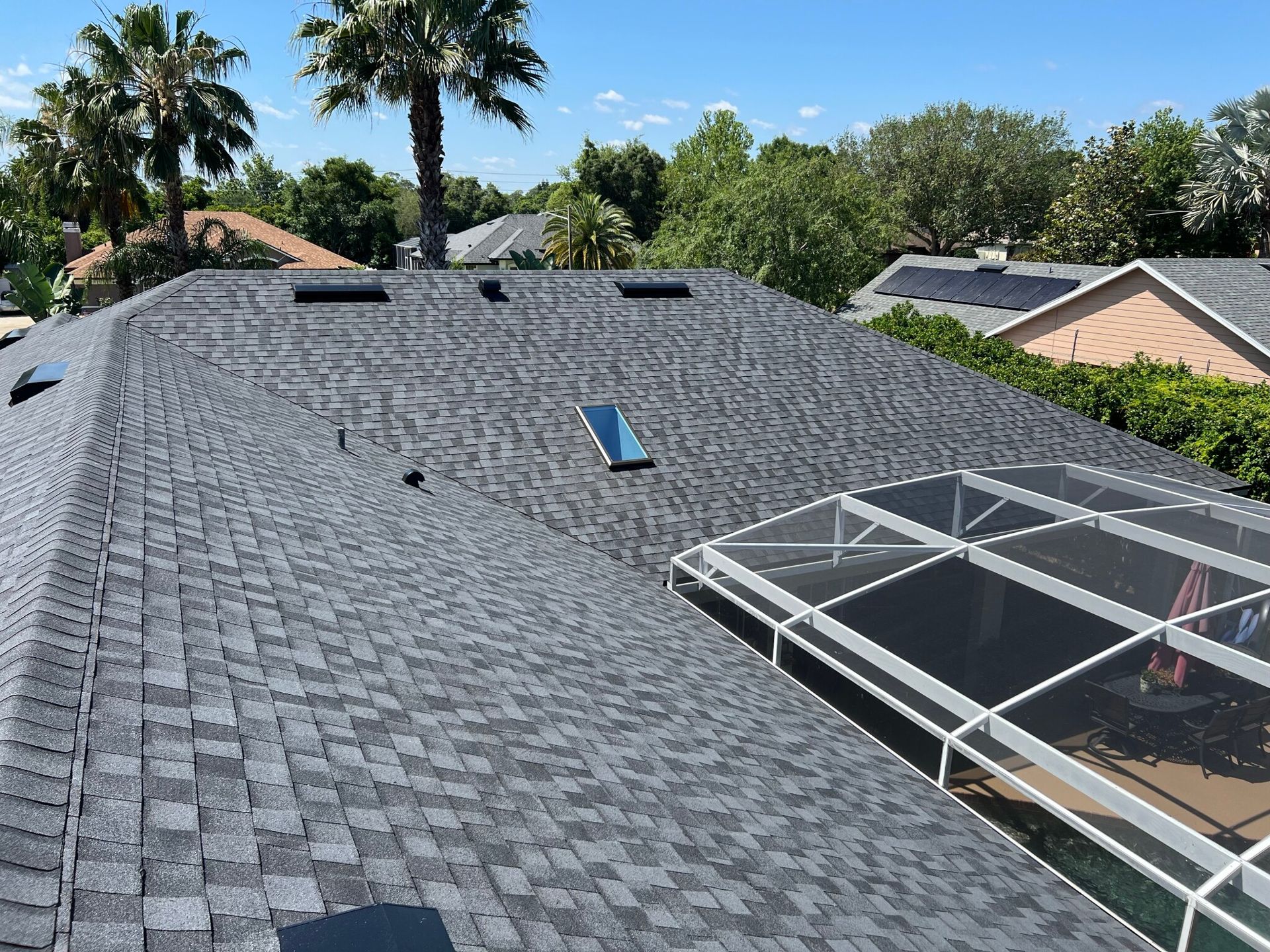
Any place something passes through the roof surface, a skylight curb, an exhaust vent, a satellite mount, is a seam that can fail well before the surrounding shingles or tile show any wear.
Shingle or tile damage upslope
A cracked tile, a lifted shingle tab, or granule loss from sun exposure can open a gap that is well above where the stain eventually appears, since gravity and wind carry the water downhill along the deck before it drops.
Each of these points behaves differently depending on wind direction, storm intensity, and how long the damage has been developing, which is why an inspection has to consider all of them rather than settling on the first one found.
TIP: If you can safely access your attic after a storm, use a flashlight held at a low angle across the underside of the decking rather than pointing it straight down. Water staining often shows up as a faint, dry trail running uphill from the wet spot, and that trail is a better clue to the entry point than the location of the stain on the ceiling below.
Central Florida Weather Adds Its Own Complications
Homes across DeBary, Deltona, Orange City, Lake Mary, Sanford, Longwood, Winter Springs, New Smyrna Beach, and Daytona Beach deal with a weather pattern that makes leak tracing harder than it would be in a milder climate. Afternoon thunderstorms rarely fall straight down. Wind pushes rain sideways and even uphill under shingle laps and flashing edges. That means the entry point during one storm can sit in a different spot than the entry point during a storm that comes from another direction.
But wind isn't the only stress at work here. Roofing materials expand in the afternoon sun and contract overnight, and that constant movement gradually works sealant and fasteners loose around every penetration and flashing detail. A roof that held tight through a mild spring can develop a new gap by the height of summer from months of that cycling alone.
Humidity throws in a variable that has nothing to do with an actual leak. Warm, moist attic air meeting a cooler surface, often near air conditioning ductwork or equipment mounted in the attic, can produce condensation on the underside of the decking. That condensation can mimic a slow leak. It shows up as general dampness rather than a single storm-timed stain, which is why ruling it out is part of any thorough inspection.
Warning: Do not assume a stain that stops growing means the leak is fixed. Some entry points only open under specific wind directions or during the heaviest part of a storm, so a leak can go quiet for weeks and then return the next time wind-driven rain hits the roof from a different angle. Painting over the stain without locating and sealing the actual source only hides the next round of damage until it reappears, usually larger than before.
How We Trace a Stain Back to Its Real Source
Tracing a leak starts above the ceiling, not below it. We inspect the shingles, tile, or metal covering first, then move to the underlayment, flashing, and every penetration on that section of roof. Inside the attic, we follow the water trail on the decking and framing rather than assuming the wet insulation closest to the stain marks the entry point.
Water testing is often part of that process. We run water over a suspected area section by section, starting low on the roof and working upward. That confirms which detail is actually letting water through instead of guessing based on where the damage shows up indoors. We also rule out sources that have nothing to do with the roof itself. A leaking air conditioning condensate line or a plumbing vent stack can produce a ceiling stain that looks identical to a roofing leak, and we've seen a roof get blamed for damage a stray AC line actually caused.
Once the true entry point is confirmed, the repair addresses that specific detail, whether it is a section of flashing, a vent boot, or a run of damaged underlayment, rather than simply resealing the area of roof closest to the stain below. That distinction is what determines whether a repair holds through the next round of Central Florida storms or fails again within a season.
Mistakes That Send Homeowners Chasing the Wrong Spot
Fixing The Ceiling First
Painting over a stain or replacing a section of drywall addresses the symptom while leaving the source active, so the same damage returns as soon as conditions line up again.
Patching Directly Above The Stain
Sealing the roof section closest to the interior damage feels logical, but if that is not where water is actually entering, the leak continues and the new patch gets blamed unfairly.
Assuming One Storm Means One Entry Point
Wind-driven rain can expose more than one weak detail during a single event, particularly on a roof with several valleys, penetrations, or transitions.
Overlooking Non-Roof Sources
Plumbing, air conditioning equipment, and attic condensation can all produce
interior water stains, and treating every stain as a roofing problem without ruling those out can lead to unnecessary roof work while the real source keeps causing damage.
Frequently Asked Questions
Why does a roof leak show up somewhere different from where the roof damage actually is?
Water follows the roof's layers rather than dropping straight down, traveling along decking, a rafter edge, or through insulation before breaking through the ceiling. Distance depends on slope, framing, and water volume.
How can I tell the difference between a roof leak and attic condensation?
Condensation appears as general dampness rather than a stain tied to a specific storm, often near air conditioning equipment. A true leak correlates with rain events, while condensation can appear during humid stretches with no rain.
Can a small ceiling stain mean a much bigger problem is happening inside the roof?
Yes. By the time a stain is visible, water has often been moving through insulation, framing, or decking for some time. A small mark can sit at the end of a much longer hidden water path.
Why does a leak only seem to happen during certain storms?
Wind direction determines which roof details take on water. A flashing seam might handle straight-down rain fine but let water in once wind pushes rain sideways, making a leak seem inconsistent despite constant underlying damage.
Is it safe to just patch the ceiling once the stain stops growing?
Patching the ceiling addresses appearance, not cause. A stain that stops growing may just mean the triggering conditions haven't repeated recently. The entry point still needs locating and sealing before the leak returns.
How often should attics be checked for hidden leak damage?
An annual check is a reasonable baseline, with an added look after major storms. Catching staining on decking or framing early often means finding a problem before it ever reaches the ceiling at all.
A Leak Traced Correctly Is A Leak That Stays Fixed
A stain tells you water won somewhere on the roof. It doesn't tell you where. The decking, rafters, flashing, and attic insulation hold that answer instead, each carrying its own piece of the path water actually traveled to reach the ceiling. Reading that path correctly, rather than guessing from the mark below, is what decides whether a repair holds through the next storm or reopens with the first hard rain that hits from a new direction.
Amtek Roofing LLC
has traced leaks back to their true entry point for homes across DeBary, FL for 15
years, following water through decking and framing rather than patching whatever roof section sits closest to the visible damage. That approach accounts for wind-driven rain, sun-cycled sealant, and the humidity swings that make Central Florida roofs behave differently from one storm to the next. A properly traced leak stays fixed, storm after storm, instead of quietly finding its way back.